Bank Customer Churn Prediction

Customer Analytics · Retention Modeling

Predictive churn analytics for early risk detection and personalized customer retention.

Business Problem

Customer churn represents a significant risk for retail banks, as acquiring new customers is substantially more costly than retaining existing ones. Traditional retention strategies often rely on reactive measures or broad marketing campaigns that fail to identify the customers most likely to leave. Without predictive insight into churn drivers and early warning signals, banks struggle to allocate retention resources effectively. The challenge is to detect at-risk customers in advance and translate behavioral signals into targeted, data-driven retention actions.

Methodology

A structured customer analytics pipeline was implemented to predict churn risk and uncover the key drivers behind customer attrition. The approach combined data preprocessing, feature engineering, and model benchmarking to compare classical statistical models with ensemble machine learning methods. Performance was evaluated on unseen test data to ensure reliable generalization, while feature importance analysis was used to translate predictive results into actionable retention insights.

Models Evaluated

  • Logistic Regression
  • Random Forest
  • Gradient Boosting

Evaluation Framework

  • Train–test data split
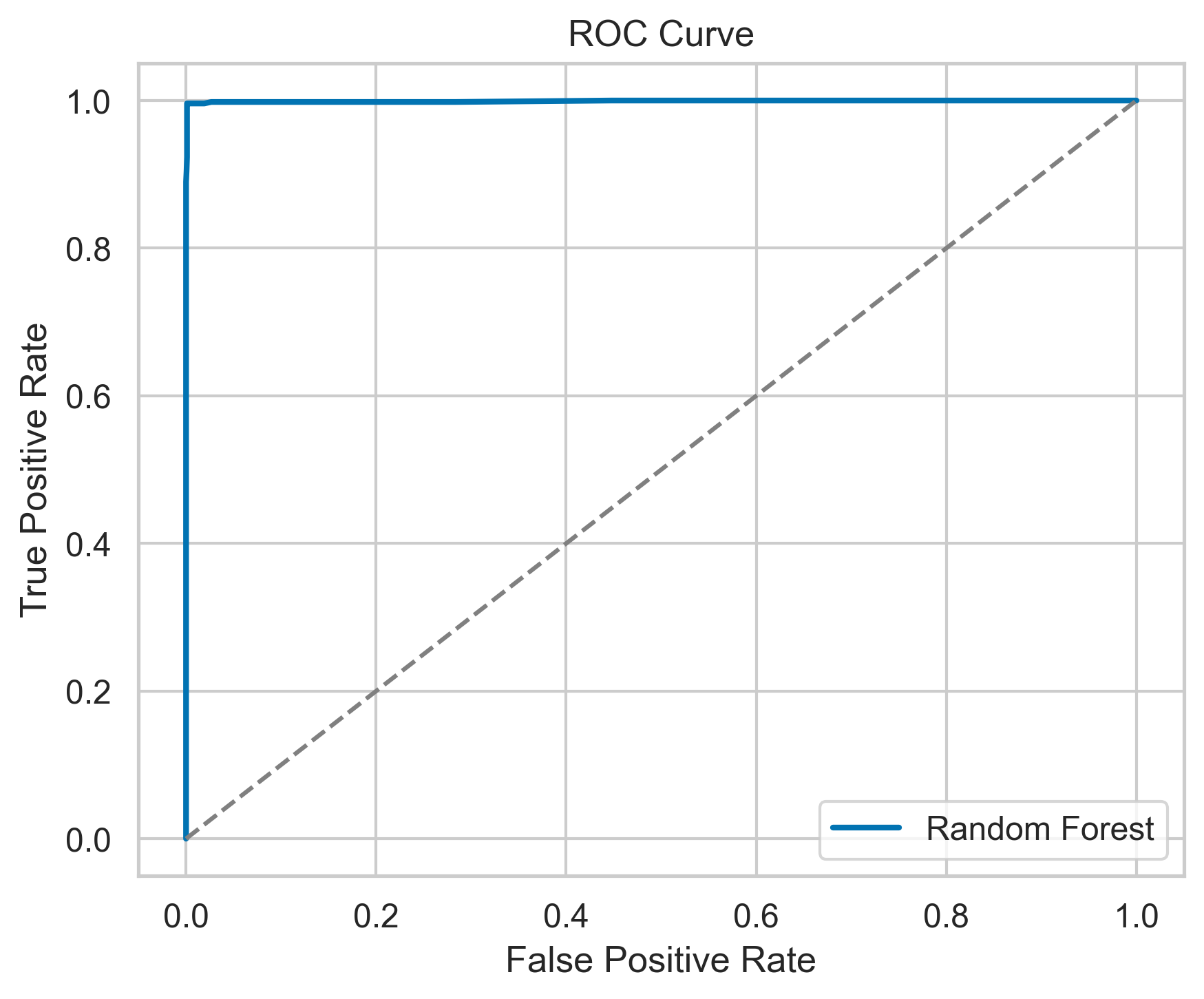
  • ROC–AUC comparison across models
  • Confusion matrix analysis
  • Precision and recall evaluation
  • Feature importance analysis for churn drivers

Results

Performance Summary

Churn Recall

99.7%

Nearly all customers who churn are correctly identified by the model.
Churn Precision

99.3%

Most customers predicted to churn actually leave, enabling reliable targeting.
False Positives

4

Only four retained customers were incorrectly flagged as churn risk.
ROC-AUC

0.999

Near-perfect ability to distinguish churned from retained customers.

Business Implications

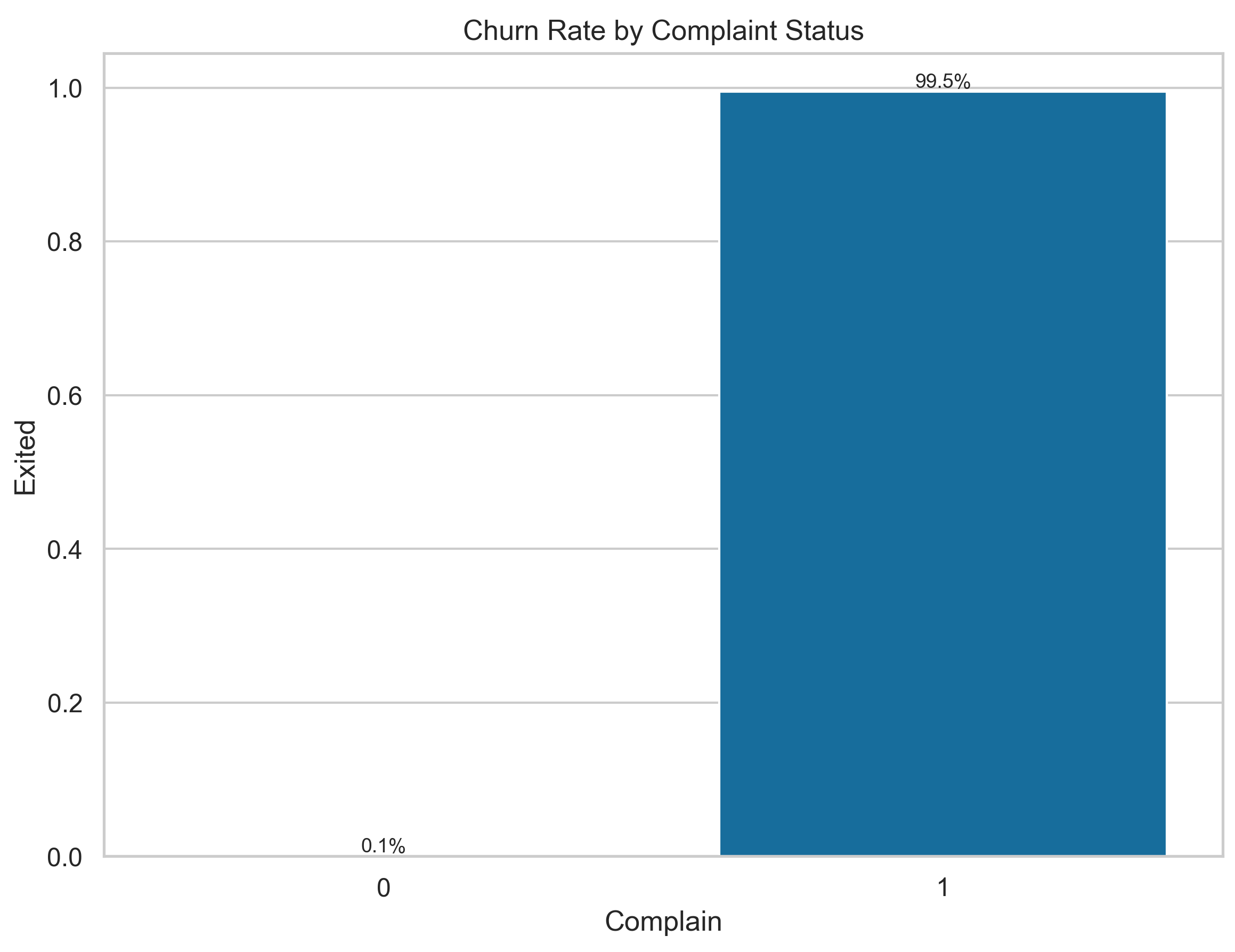
The analysis demonstrates that effective churn management requires more than accurate prediction—it requires understanding the drivers behind customer attrition. Complaint-related service issues emerged as the strongest indicator of churn risk, highlighting the importance of rapid service recovery and customer support interventions. By identifying at-risk customers early and targeting the underlying drivers of dissatisfaction, banks can prioritize retention efforts, improve customer experience, and reduce long-term revenue loss.
Let’s discuss your problem
Whether you’re addressing a foundational data need or a complex decision challenge, we’re ready to work with you.
Start a conversation