Customer Review Sentiment Analysis for E-Commerce

Customer Analytics · Sentiment Intelligence

Natural language processing analysis of thousands of product reviews to detect customer sentiment patterns and uncover key drivers of dissatisfaction.

Business Problem

E-commerce companies collect thousands of customer reviews, but extracting actionable insights from unstructured feedback is challenging. Manual review analysis is time-consuming and subjective, making it difficult to systematically identify recurring product issues or emerging dissatisfaction patterns. Without automated sentiment analysis, businesses risk overlooking key drivers of negative customer experiences, such as sizing inconsistencies, fabric quality concerns, or product fit issues. A scalable approach is needed to analyze review text, quantify sentiment trends, and transform customer feedback into measurable product and service improvements.

Methodology

We developed a natural language processing pipeline to analyze customer reviews and identify sentiment patterns associated with product dissatisfaction. The workflow included text preprocessing, sentiment labeling, exploratory text analysis, and supervised machine learning classification. Word frequency analysis and visualization techniques were used to uncover dominant complaint themes. A Logistic Regression classifier was then trained to automatically detect negative sentiment in review text, enabling scalable monitoring of customer feedback.
Models Evaluated

  • Logistic Regression
  • Naive Bayes
  • Support Vector Machine
  • Random Forest

Evaluation Framework

  • Text preprocessing and tokenization
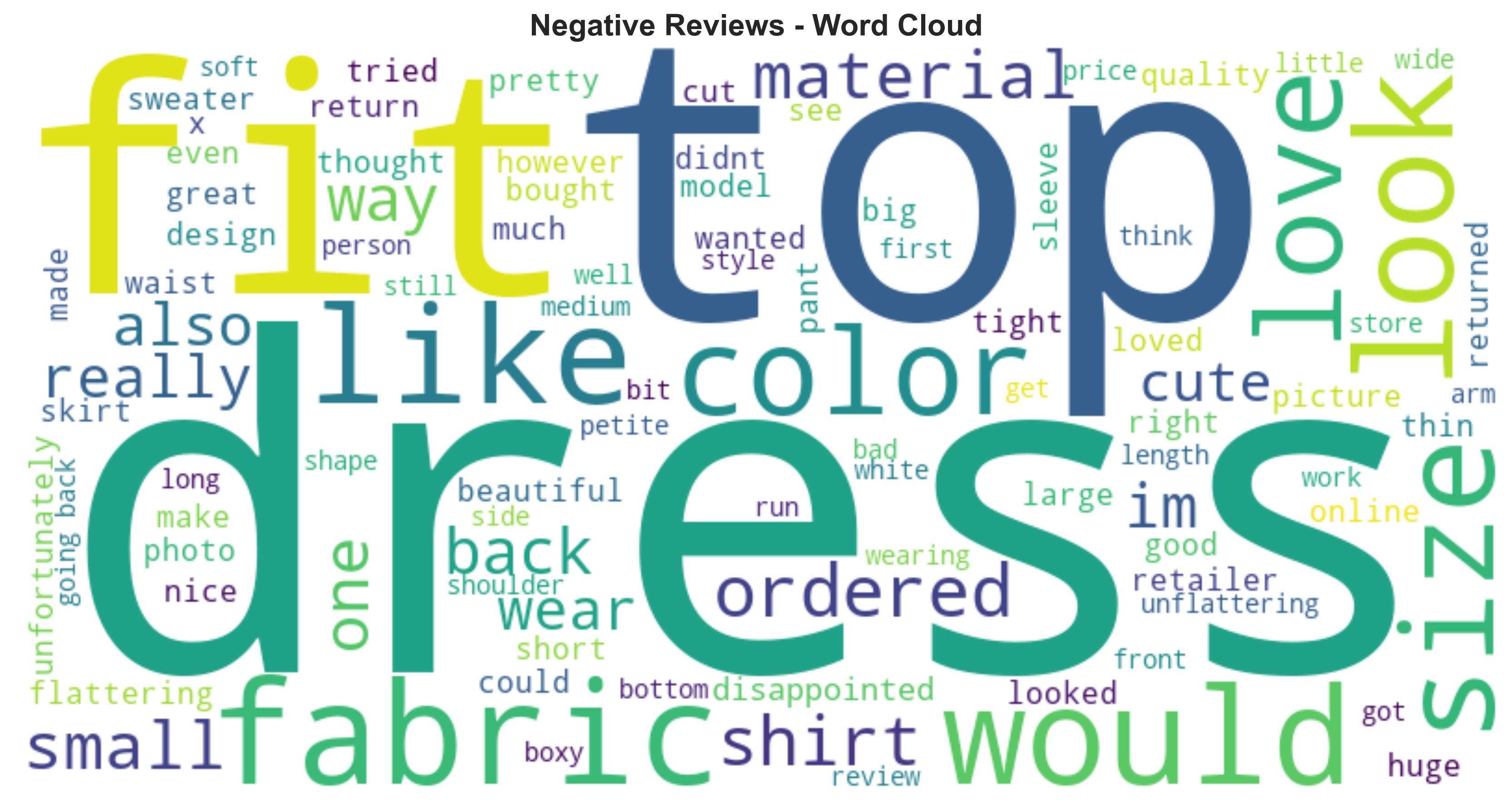
  • Word frequency and topic exploration
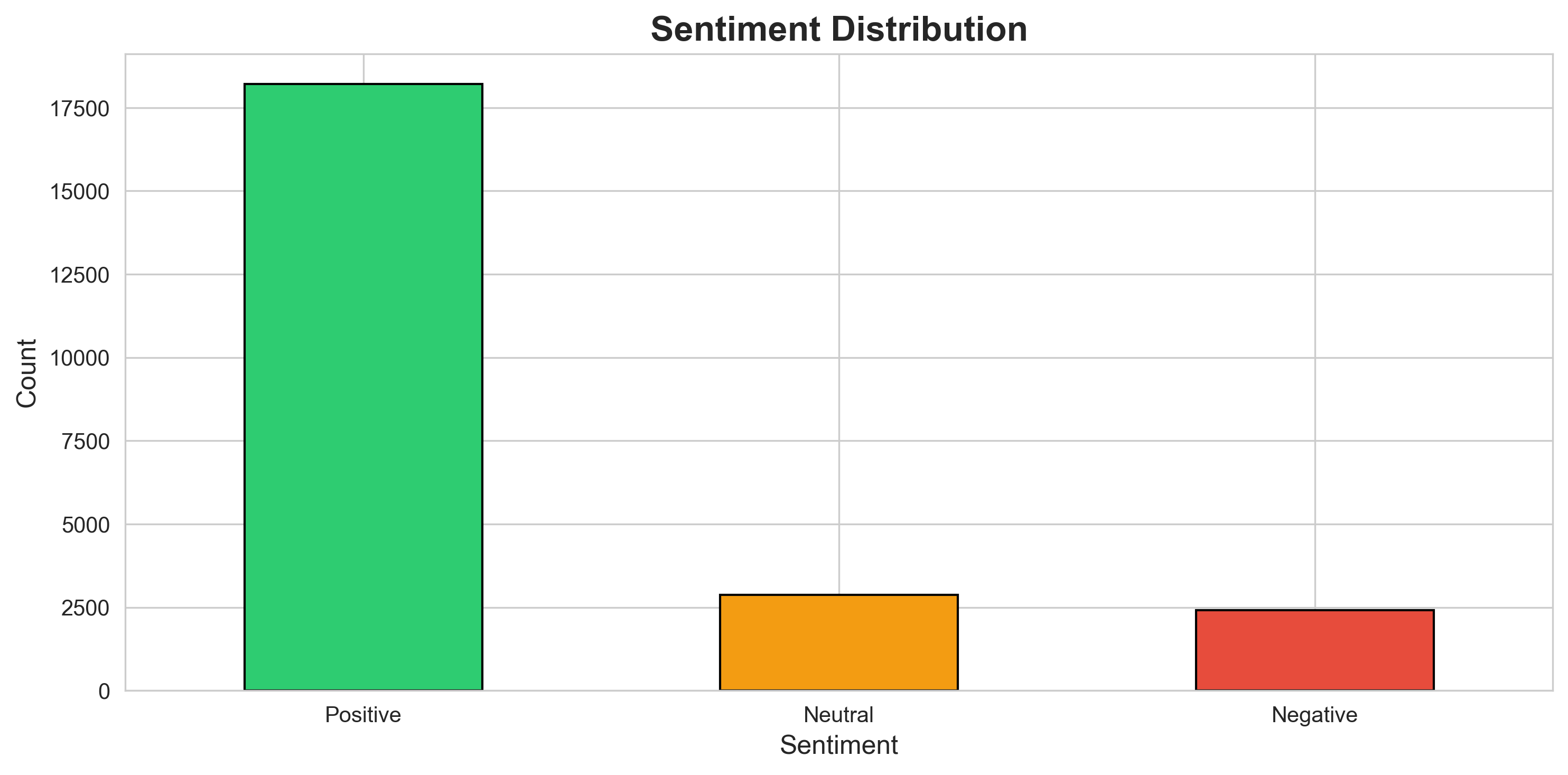
  • Sentiment classification training
  • Model performance evaluation using accuracy and ROC-AUC
  • Interpretation of key complaint themes through word frequency analysis

Results

Performance Summary

Sentiment Accuracy

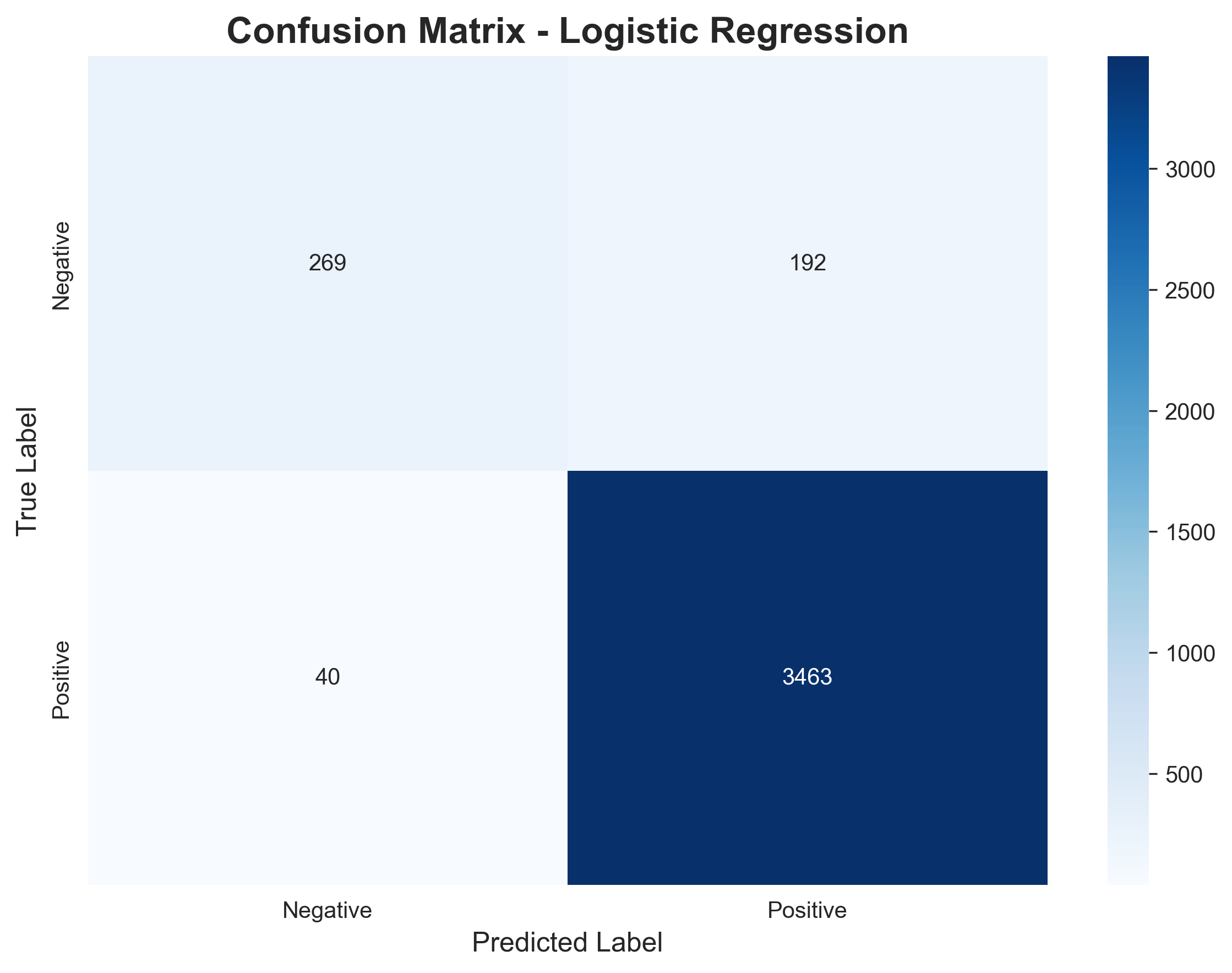
94.1%

Reliable classification of customer review sentiment.
Positive Recall

99%

Most positive customer reviews are correctly identified.
Negative Precision

87%

Model effectively detects genuine dissatisfaction signals.
False Negatives

40

Very few negative reviews are missed by the classifier.

Business Implications

Customer review sentiment analysis enables e-commerce companies to convert unstructured feedback into actionable product insights. The analysis highlights that dissatisfaction is primarily linked to sizing inconsistencies, fit issues, and fabric quality concerns. By continuously monitoring sentiment trends and complaint themes, retailers can prioritize product improvements, refine sizing guidance, and address quality issues more quickly. Deploying automated sentiment classification also allows companies to track customer experience at scale and respond proactively to emerging product problems.
Let’s discuss your problem
Whether you’re addressing a foundational data need or a complex decision challenge, we’re ready to work with you.
Start a conversation