Solar Energy Production Forecasting

Energy Analytics · Renewable Forecasting

Weather-aware time-series forecasting for solar power generation and grid planning.

Business Problem

Renewable energy production, particularly solar power, is highly dependent on weather conditions such as solar irradiation and temperature. Grid operators and energy providers must anticipate fluctuations in power generation to ensure reliable electricity supply and effective energy planning.
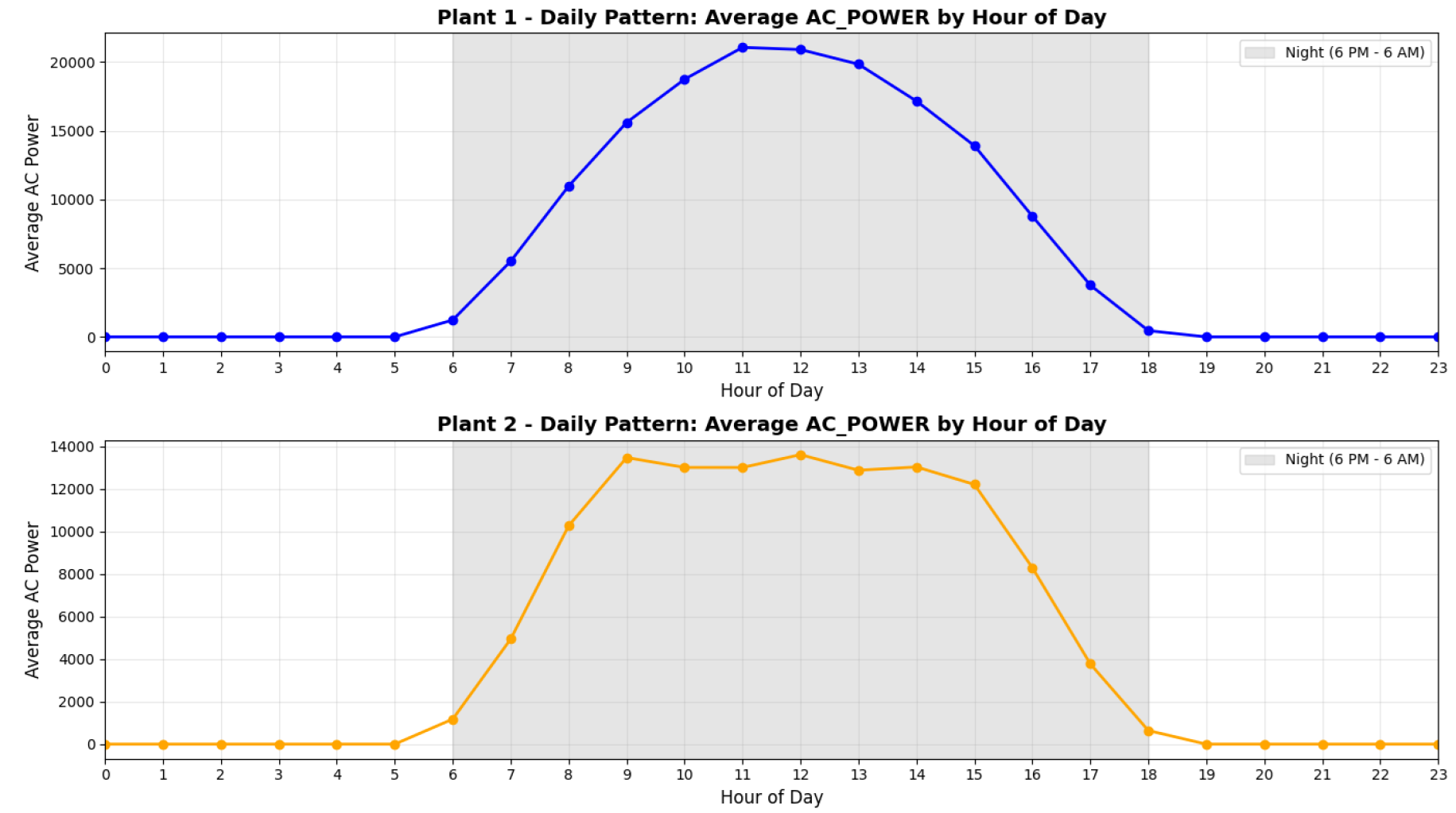
Without accurate forecasting, sudden changes in solar generation can create imbalances between energy supply and demand, increasing operational risks for power grids. The challenge is to develop a forecasting approach that captures daily solar production cycles and incorporates weather information to improve prediction accuracy.

Methodology

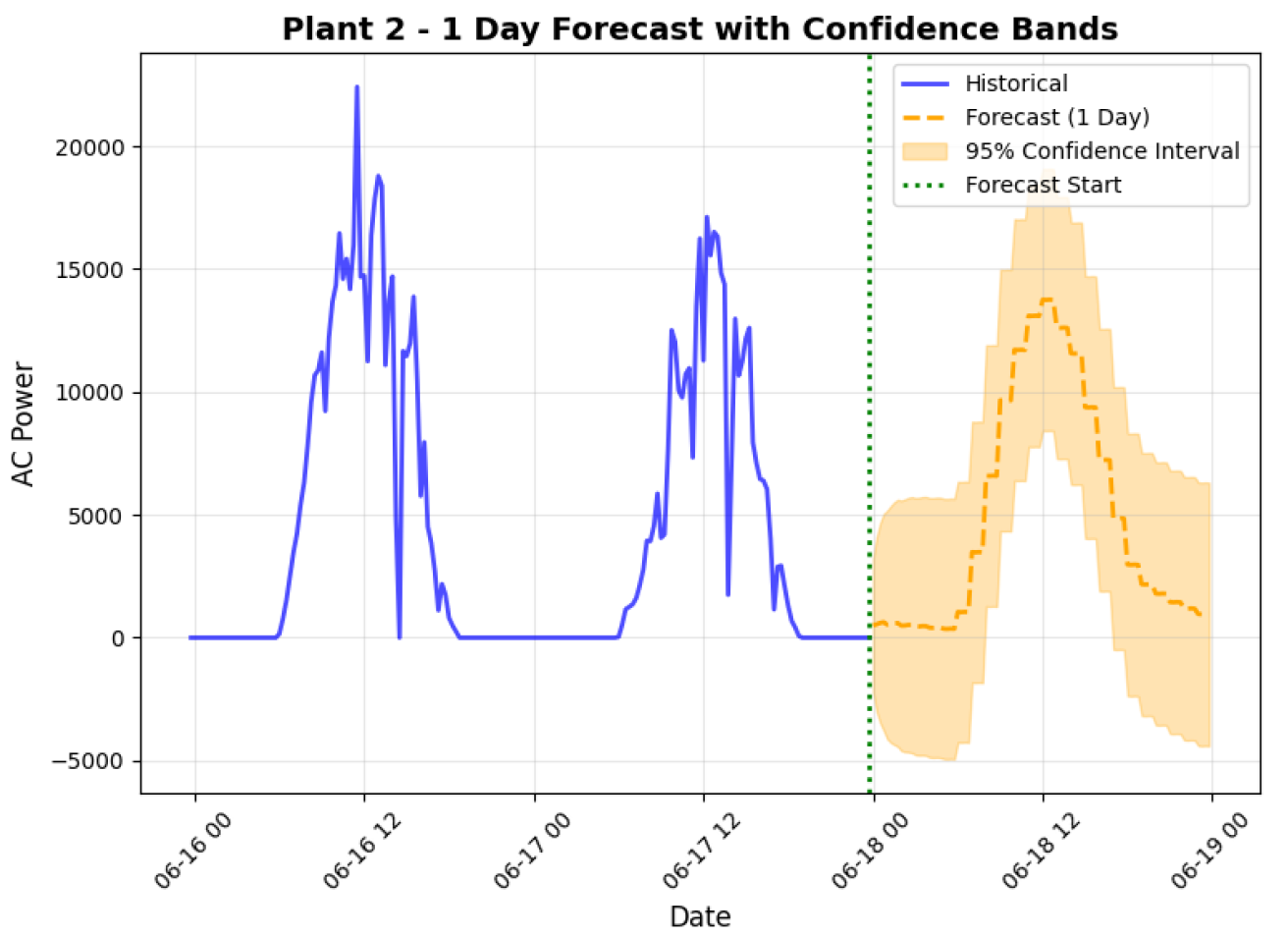
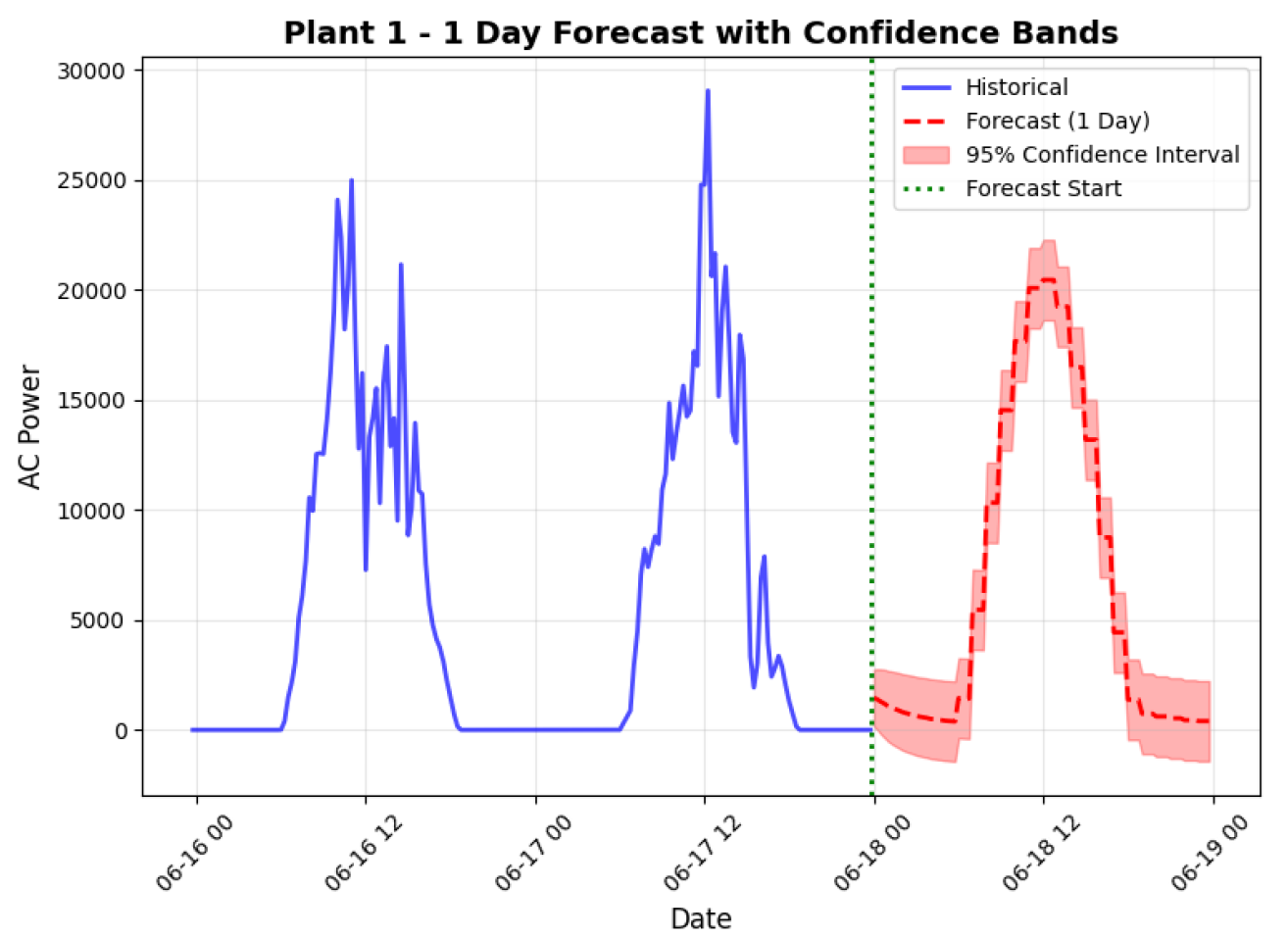
A time-series forecasting approach was used to predict solar power generation based on historical production data and weather variables. The generation dataset was merged with environmental measurements such as solar irradiation and temperature to capture the influence of weather conditions on energy output. An ARIMAX model was applied to incorporate both temporal dependencies and exogenous weather factors, enabling more accurate forecasting of daily solar generation patterns.
Models Evaluated

  • ARIMAX time-series model
  • Weather-driven forecasting variables
  • Temporal power generation patterns

Evaluation Framework

  • Train–test time split
  • RMSE
  • MAE
  • Forecast vs actual comparison

Results

Performance Summary

R² (Plant 1)

0.983

Model explains most of the variability in solar power generation.
RMSE (Plant 1)

≈1037

Low prediction error for daily solar generation forecasts.
R² (Plant 2)

0.734

Moderate prediction accuracy due to higher variability.
Forecasting Model

ARIMAX

Weather-aware time-series model capturing temporal and environmental effects.

Business Implications

Accurate forecasting of renewable energy production is essential for efficient grid management and sustainable energy planning. By incorporating weather variables into the forecasting model, energy providers can better anticipate fluctuations in solar generation and adjust supply strategies accordingly. Reliable short-term predictions support improved energy scheduling, reduce operational uncertainty, and help integrate renewable energy sources more effectively into the electricity grid.
Let’s discuss your problem
Whether you’re addressing a foundational data need or a complex decision challenge, we’re ready to work with you.
Start a conversation